
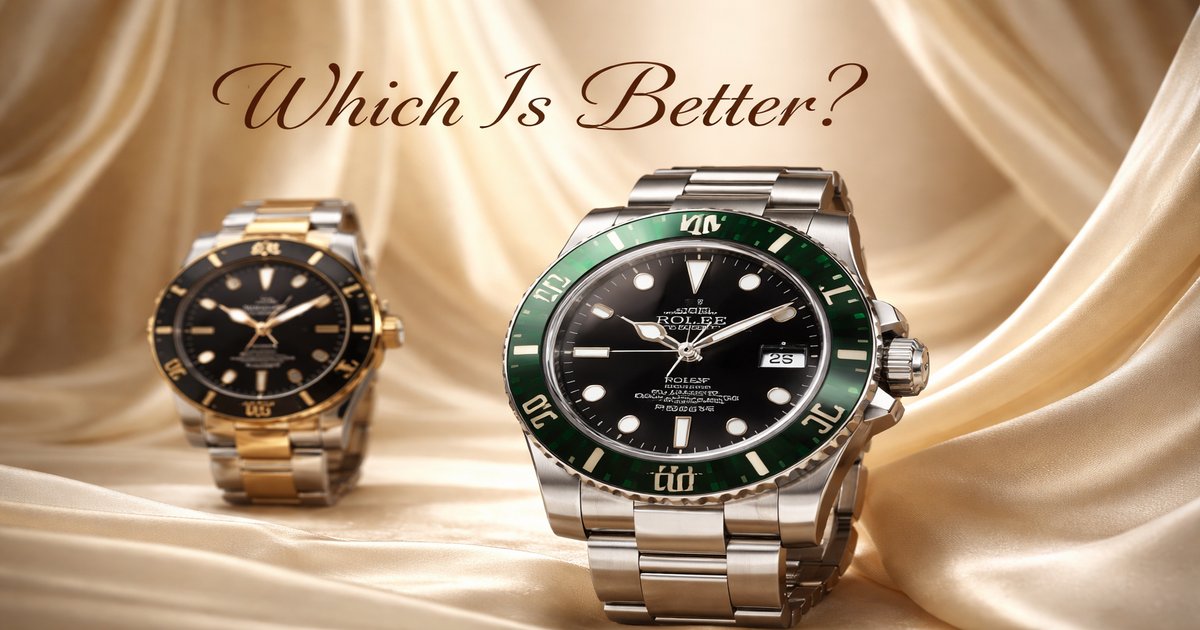
You’re eyeing a luxury watch and trying to decide between Rolex and Tudor. Maybe you’re drawn to Rolex’s iconic status, or perhaps Tudor’s reputation for offering quality at a lower price point is calling your name. Let’s dig into the details to help you decide which one fits your wrist and lifestyle best.
| Specification | Rolex | Tudor |
|---|---|---|
| Price Range | $5,000 – $75,000+ | $2,000 – $9,000 |
| Movement Type | In-house | In-house |
| Water Resistance | 100m – 1,220m | 100m – 500m |
| Material Quality | 904L Stainless Steel, Gold, Platinum | 316L Stainless Steel, Gold |
| Brand Prestige | ✓ | ✗ |
| Warranty | 5 Years | 5 Years |
✅ rolex Pros
- Unmatched brand prestige and recognition.
- Exceptional resale value, often appreciating over time.
- High-end materials like 904L stainless steel and platinum.
❌ rolex Cons
- Significantly higher price point.
- Long waitlists for popular models.
- Can be too flashy for some preferences.
✅ tudor Pros
- Offers great value for the price with in-house movements.
- Maintains a classic style with modern updates.
- Shorter waitlists and more accessible availability.
❌ tudor Cons
- Less brand prestige compared to Rolex.
- Lower maximum water resistance for diving models.
- Uses 316L steel, which is less corrosion-resistant than Rolex’s 904L.
Performance and Movement
Rolex and Tudor both offer in-house movements, which is a big deal for watch enthusiasts. Rolex’s movements are often considered the gold standard for precision and longevity. They use proprietary technologies like the Parachrom hairspring, which boosts resistance to shocks and temperature variations. Tudor, on the other hand, has been stepping up its game with movements like the MT5602, which offers a solid 70-hour power reserve. If you’re someone who obsesses over mechanical excellence and can afford it, Rolex is the way to go. But if you want reliable performance without breaking the bank, Tudor is no slouch.
Build Quality and Materials
Rolex is known for its use of 904L stainless steel, which is more corrosion-resistant and holds a polish better than the more commonly used 316L steel found in Tudor watches. This might not matter much if you’re just wearing your watch to the office, but if you’re diving or sailing, that extra durability is a win. Tudor doesn’t skimp on quality either, offering robust construction and occasionally utilizing gold in their designs. Still, if you’re a material snob, Rolex’s superior materials are hard to deny.
Value and Prestige
You can’t talk about Rolex without mentioning its brand prestige. Owning a Rolex is a status symbol, plain and simple. It’s like the luxury car of watches. Tudor, while less prestigious, offers incredible value for what you pay. It’s like getting a high-end sedan that performs almost as well as a luxury car but for a fraction of the price. If you’re someone who values brand prestige, Rolex is your go-to. But if you want the most bang for your buck, Tudor offers compelling options.
What many reviews won’t tell you is that Rolex’s higher price isn’t just about materials and movement; it’s also about the badge. Meanwhile, Tudor gives you a taste of that luxury life without the need for a second mortgage. Also, don’t expect Tudor to appreciate in value like a Rolex might, so choose wisely based on your priorities.
Our Final Verdict: Which One Should You Buy?
If you’re someone who values legacy, brand prestige, and top-notch materials, and you have the budget for it, go for a Rolex. It’s a classic choice that rarely, if ever, depreciates. On the other hand, if you’re looking for a high-quality watch with solid performance and you don’t mind sacrificing a bit of brand prestige, Tudor is the way to go. It’s perfect for those who want a reliable timepiece without the Rolex price tag.
Is Rolex really worth the extra cost?
If you value brand prestige, resale value, and premium materials, then yes, Rolex is worth it. However, for pure functionality, Tudor offers similar performance at a lower price.
How does Tudor compare in terms of longevity?
Tudor watches are built to last and feature robust in-house movements. While they may not have the same high-end materials as Rolex, they are still reliable and long-lasting.
Are Tudor watches compatible with Rolex parts?
No, Tudor and Rolex parts are not interchangeable. Each brand uses its own proprietary parts and movements, so don’t count on swapping components between the two.